



The climate change re-distribute the tuna
The AZTI is leading a study on the impact of future ocean conditions on the distribution and abundance of six species of tuna,
The research anticipates, under scenarios of global warming from the sea, rises to the tropical species such as skipjack and yellowfin tuna, that the majority of human consumption, while the rest of species are moved towards the poles.
Some of these species move to the polar regions, and others do the opposite.
The results of the study, led by researchers Haritz Arrizabalaga and Maite Erauskin, have been published in the prestigious scientific journal Global Change Biology. populations of pelagic fish in regions such as the Indian Ocean. Pasaia, to April 09, 2019.- The increase in skipjack and yellowfin tuna in the tropical zone, and the displacement of other species (tuna, Atlantic bluefin tuna, bigeye tuna and bluefin tuna from the south) toward colder waters are the main findings of an investigation led by AZTI, who has analyzed the impact of climate change on the species of tuna are more important.
Quantifying future trends
The study, led by researchers from AZTI Haritz Arrizabalaga and Maite Erauskin-Extramiana, has taken into account the effect of the environmental conditions in the global distribution of tuna species such as the nice of the north, the atlantic bluefin tuna, southern bluefin tuna, bigeye tuna, tropical, skipjack and yellow fin tuna or yellowfin tuna between 1958 and 2004, which has allowed us to investigate the influence of climate change on the future and to make concrete predictions.
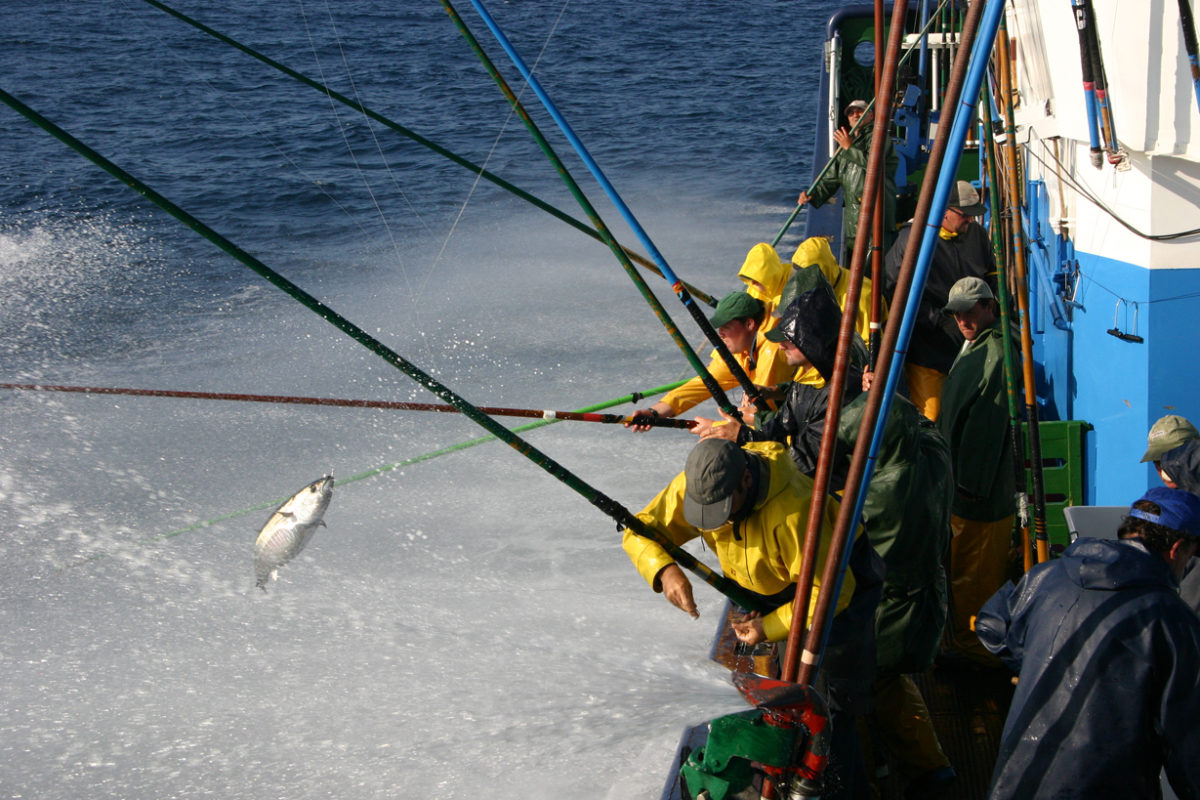
During the historical period analyzed, the limits of distribution of the habitat of tuna have moved towards the poles at a rate of 6.5 km per decade in the northern hemisphere and 5.5 km per decade in the southern hemisphere. On the basis of the influence of climate change on the future changes are expected still more pronounced in the distribution of the tuna, and in abundance, especially at the end of the century (2080-2099),” says Arrizabalaga.
In particular, the study predicts that the temperate tuna as the nice of the north, the atlantic bluefin tuna and the southern bluefin move towards the poles. Bigeye tuna, for its part, will fall in the tropics to move to more temperate areas. On the contrary, the analysis predicts that the skipjack and yellowfin tuna, main tuna canned, become more abundant in the tropics, as well as in most areas of exploitation of the coastal countries, that is to say on the fringes sea extending from its coast to a distance of 200 nautical miles.
Taking into account that the majority of human consumption of protein tuna comes from the skipjack and yellowfin tuna in the tropical belt, the data obtained are relatively good news for the tuna fishing remains a source of power is important,” says the expert.
The study has allowed to analyze how it will change in the global distribution and abundance of the main species of tuna due to climate change and, in this way, quantifying future trends (how you move) of the populations.
The tuna are resources of great economic importance, and a source of key protein for a large part of the population. With climate change and its spatial distribution is changing and with it the opportunities of the different countries to gain access to this source of wealth. This study seeks to explain what has happened in the past and predict what will happen in the future, so that countries and fishing fleets to be able to think of strategies of adaptation to the new circumstances,” adds Erauskin-Extramiana.
The research part of the program of research IMBER-CLIOTOP (Climate Impacts on Oceanic Top Predators), an initiative of international scientific collaboration, which has among its objectives the prediction of the impact of climate change on large predators such as tuna.
The study, which has been published in the prestigious scientific journal Global Change Biology, has been driven by AZTI, in collaboration with the ICM-CSIC, Barcelona and CSIRO in Australia, and has the support of the Basque Government and the Biodiversity Foundation.
Know in advance what will happen in the future allows you to work strategies of adaptation to the changes. If a local fleet of a coastal country anticipates the changes in abundance and distribution of the target species, you can adapt your fishing gear or a change of target species. It is possible that you can continue capturing the same species, but investing in larger ships, which will enable them to go far in search of such copies,” concludes the researcher
Bibliographic reference:
Erauskin-Extramiana, M., H. Arrizabalaga, A. J. Hobday, A. Cabre, L. Ibaibarriaga, I. Arregui, H. Murua, and G. Chust. 2019. Large-scale distribution of tuna species in a warming ocean. Global Change Biology. https://onlinelibrary.wiley.com/doi/abs/10.1111/gcb.14630.
Source: https://www.azti.es/

Leave a Reply